When planning a backyard upgrade—whether it’s a patio, walkway, or driveway—one of the biggest decisions you’ll face is pavers vs. concrete. Both are popular, durable options, but they offer very different benefits in terms of appearance, maintenance, and long-term value.
So which one is right for your backyard project? Let’s break it down.
What Are Concrete Surfaces?
Concrete is a poured surface that hardens into a single solid slab. It’s commonly used for patios, driveways, sidewalks, and pool decks.
Pros of Concrete:
- Lower upfront cost
- Quick installation
- Clean, simple look
- Works well for large, open areas
Cons of Concrete:
- Prone to cracking over time
- Repairs are noticeable and often require replacing sections
- Limited design flexibility
- Can fade or stain with age
Concrete is often chosen for its affordability and speed, but it can lack personality and long-term flexibility.
What Are Pavers?
Pavers are individual stones or concrete units installed piece by piece over a compacted base. They come in a wide range of shapes, colors, and textures.
Pros of Pavers:
- Highly durable and long-lasting
- Cracks are rare—and easy to fix if they occur
- Wide variety of design options
- Adds visual interest and curb appeal
- Better drainage when installed correctly
Cons of Pavers:
- Higher initial cost
- Installation takes more time
- Requires proper base preparation
Pavers are a favorite for homeowners who want a custom, high-end look with long-term reliability.
Appearance & Design Flexibility
If design matters to you, pavers win hands down.
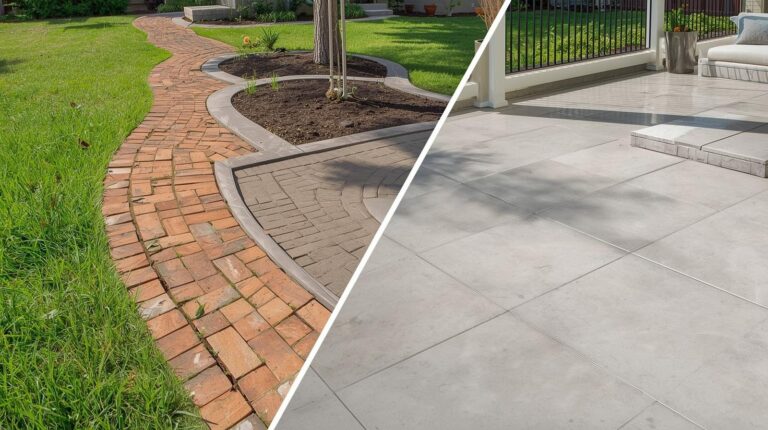
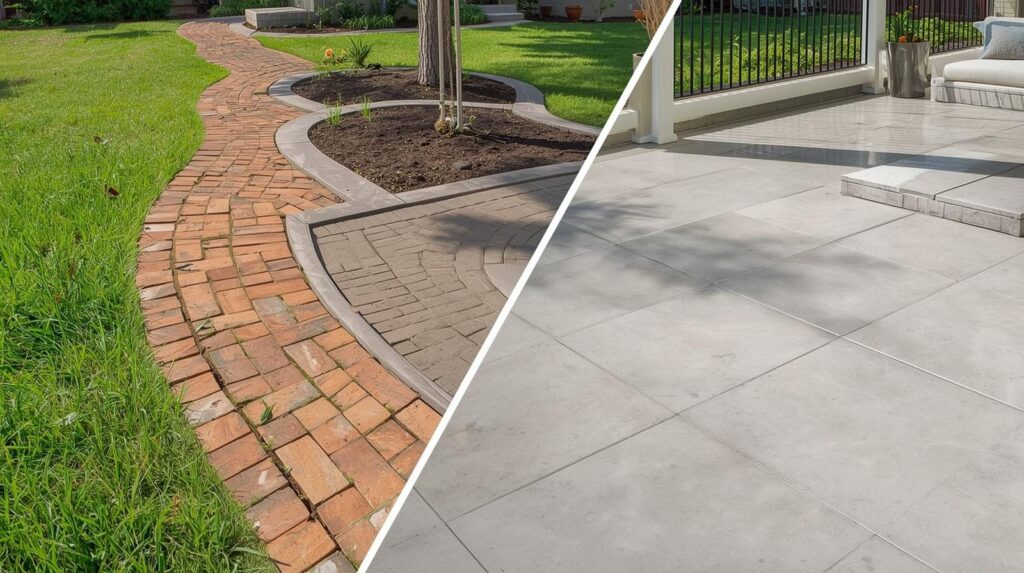
Concrete offers limited options—mainly color, stamping, or texturing. Over time, stamped concrete can lose its definition and look worn.
Pavers, on the other hand, allow for:
- Patterns (herringbone, basket weave, running bond)
- Multiple color blends
- Borders and accents
- A natural stone or modern aesthetic
Pavers can transform a basic backyard into a true outdoor living space.
Durability & Longevity
Concrete is strong, but it’s not flexible. Temperature changes, soil movement, and moisture can cause cracks. Once cracked, repairs are permanent and visible.
Pavers are installed as individual units, which allows them to shift slightly with the ground. If one paver is damaged, it can simply be replaced—no patchy repairs required.
Bottom line: Pavers typically last longer and age better.
Maintenance & Repairs
Concrete requires:
- Occasional sealing
- Crack repairs
- Pressure washing to prevent staining
Pavers require:
- Occasional joint sand replenishment
- Basic cleaning
- Optional sealing for color retention
While both need maintenance, pavers are easier and cheaper to repair over time.
Cost: Short-Term vs. Long-Term
Concrete usually costs less upfront, making it appealing for tight budgets or temporary solutions.
Pavers have a higher initial cost, but they often provide:
- Better long-term value
- Fewer costly repairs
- Higher resale appeal
Think of concrete as a short-term win, and pavers as a long-term investment.
Which Is Right for Your Backyard?
Choose concrete if:
- You need the lowest upfront cost
- You want a fast, simple installation
- Design flexibility isn’t a priority
Choose pavers if:
- You want a premium, custom look
- Durability and longevity matter
- You want easy repairs and better resale value
Final Thoughts
Both pavers and concrete have their place—but for homeowners looking to elevate their outdoor space, pavers offer unmatched style, strength, and long-term performance.
At Backyard Paradiso, we help homeowners choose the right materials for their lifestyle, budget, and vision. Whether you’re planning a DIY project or a full backyard transformation, we’re here to help every step of the way.