
Composite Fence Installation
Co-extruded wood plastic composite in black, brown or gray, set on a plug-in rail system with a matched component package and optional solar post caps. The grain and warmth of wood, without the staining cycle.
A Boundary That Behaves Like Part of the Garden
A fence is the longest structure on most residential lots and usually the first one anyone sees. Backyard Paradiso installs co-extruded composite fencing because it keeps the grain and warmth of wood while removing the staining, sealing and board replacement that turn a wood fence into a recurring chore.
Every run is planned to the property: where the line sits, how tall it stands, where the gates open and how the fence meets the patio, the planting beds and the house. The result reads as a designed edge to the yard rather than a product bolted onto it.
Fencing sits within the outdoor structures category alongside pergolas, decks and glass railings, and a full material comparison is available in the composite fencing guide.

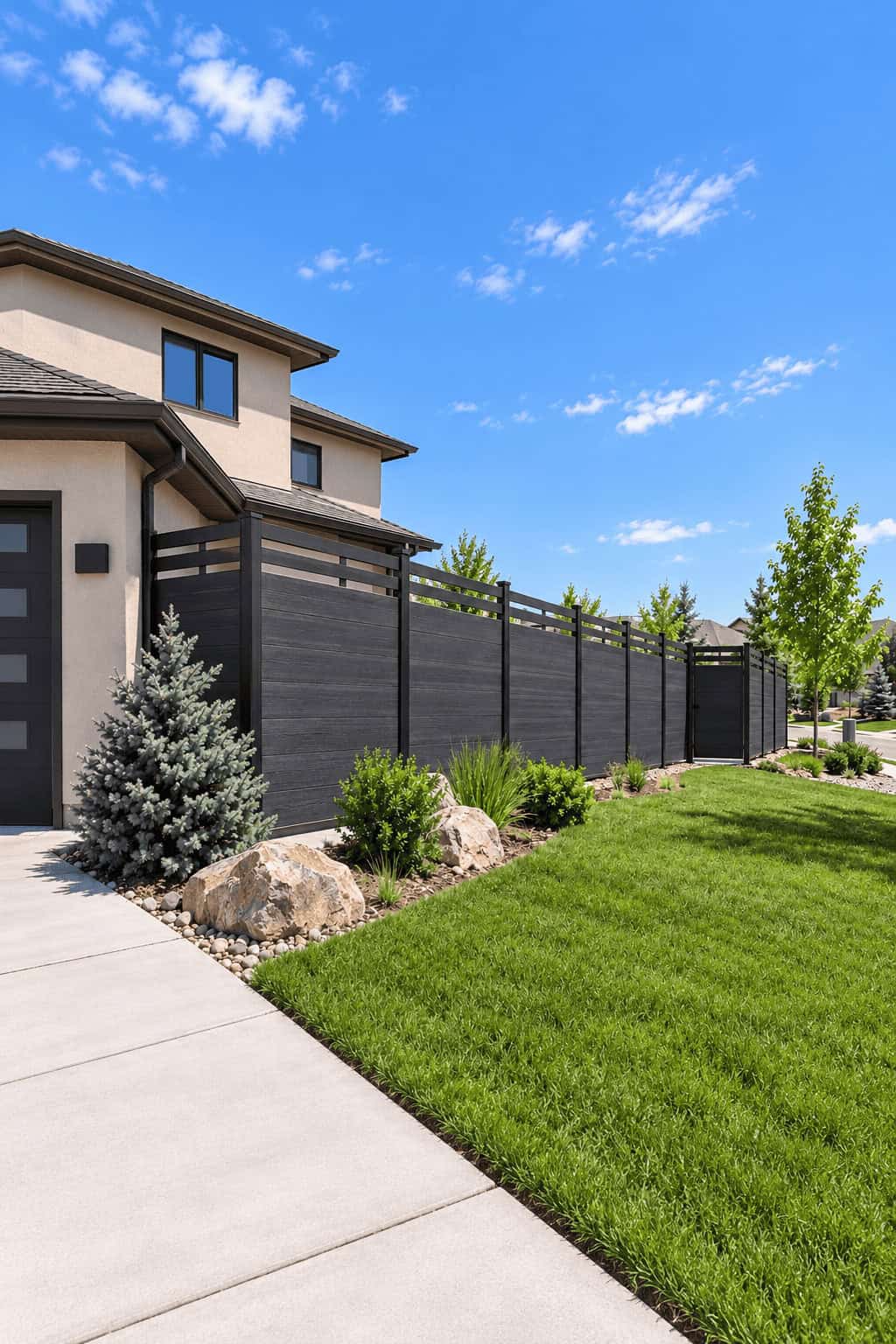
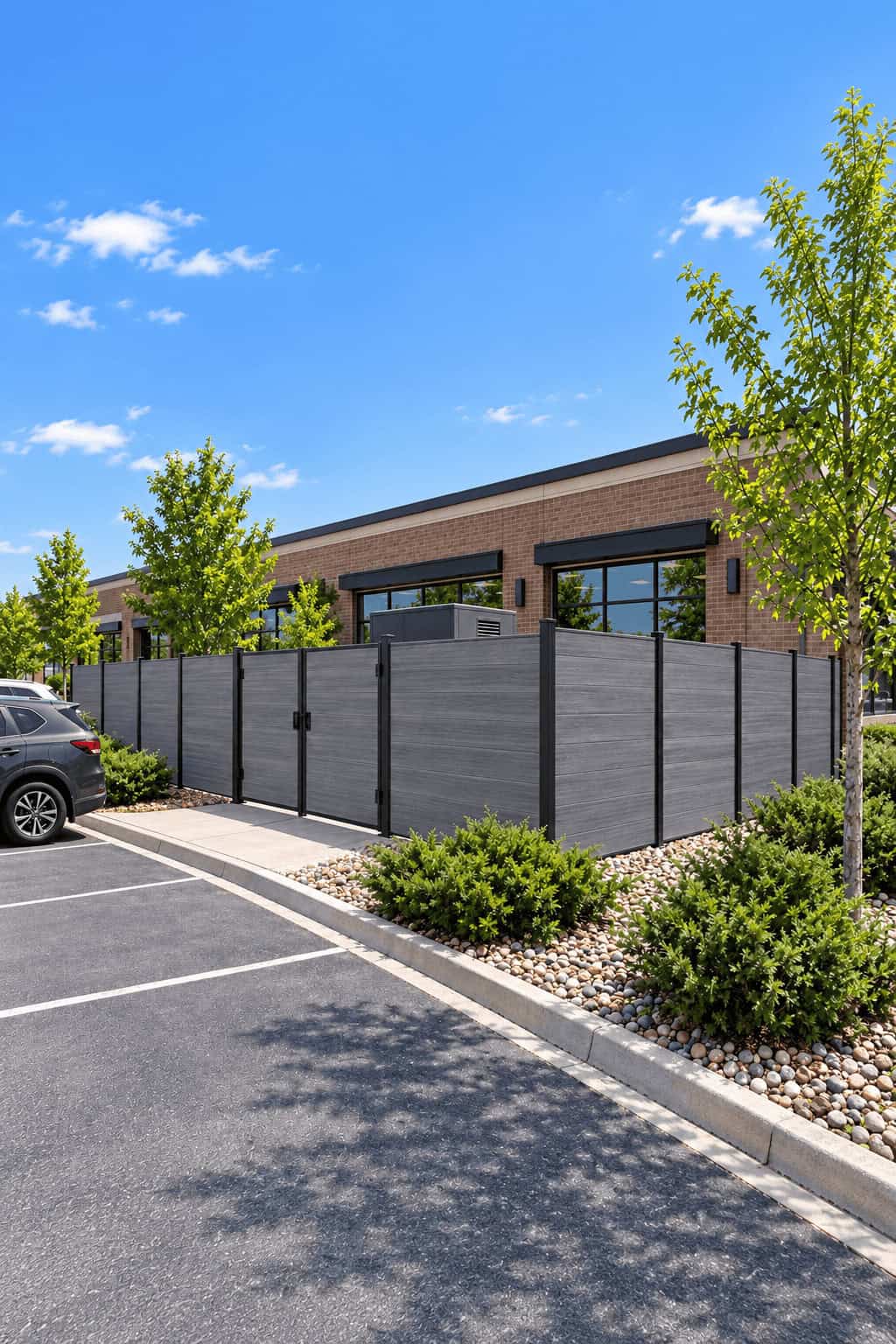
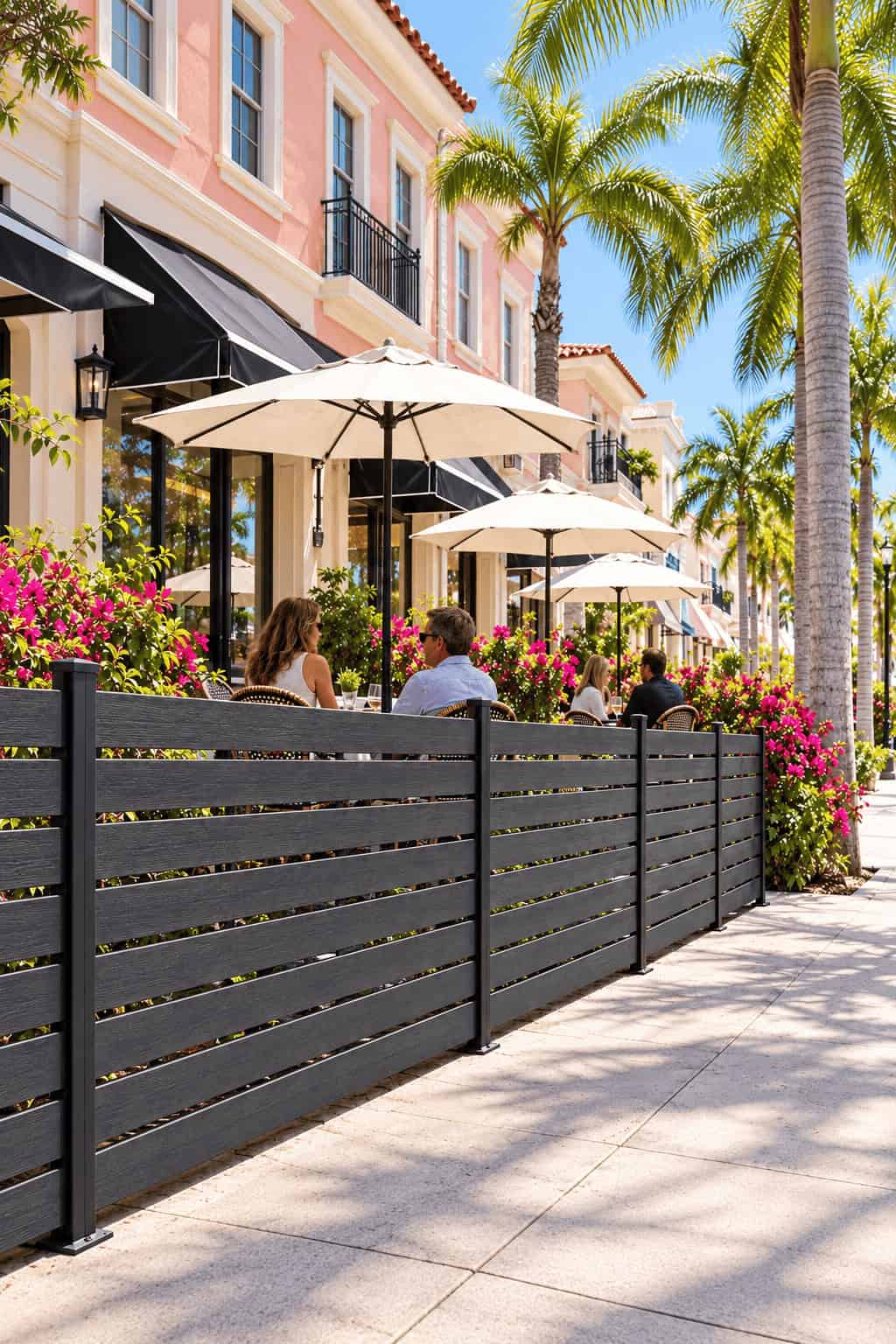
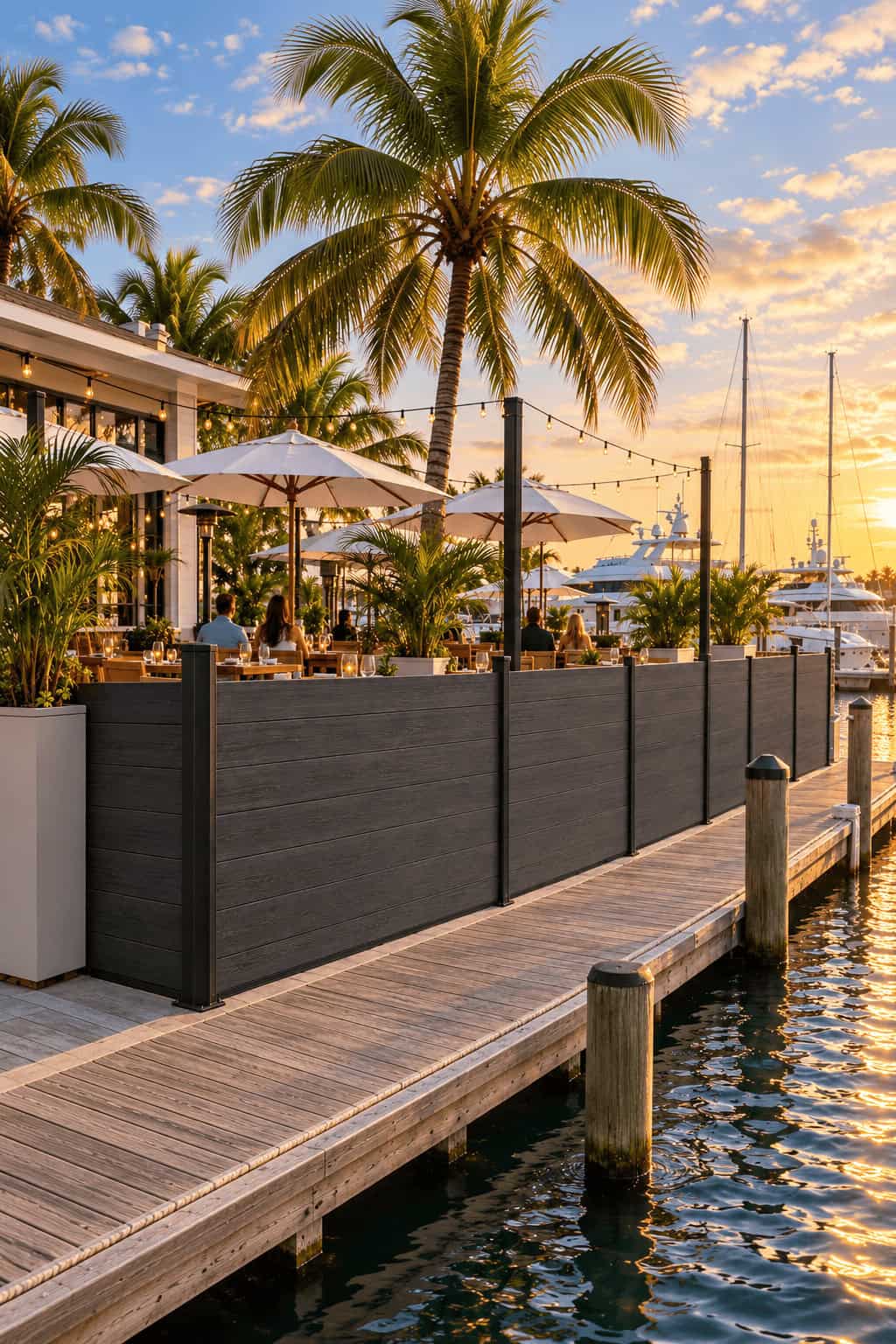
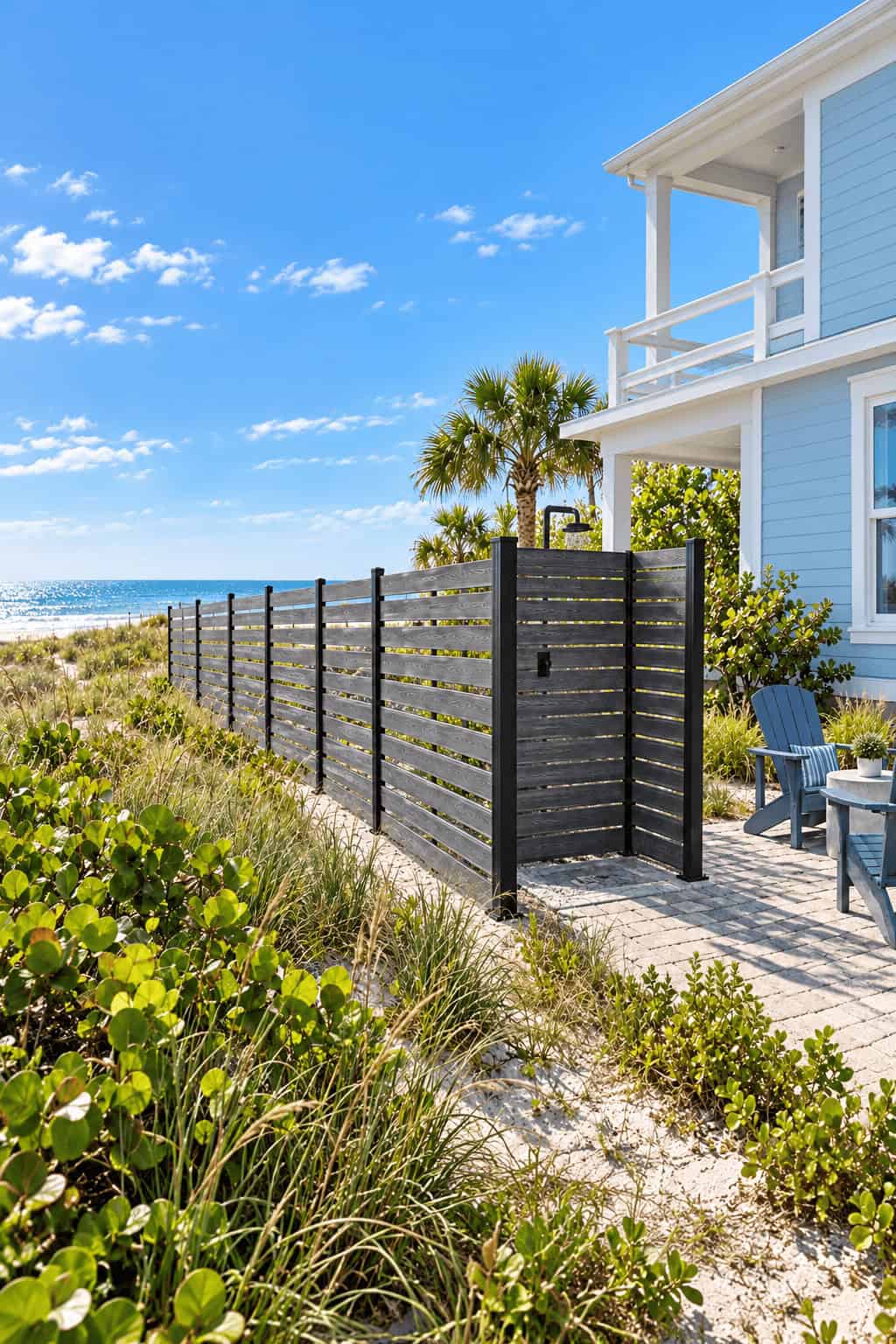
The photos on this page are representations of what a composite fence can look like, but the truest picture is one designed for your own backyard, so request a quote to see what fits your space.
What Is Built In, and What It Means at Home
Composite fencing earns its place through details that are easy to miss in a showroom and obvious after a few seasons outdoors.
Co-Extruded WPC Boards
A core of wood fiber and polymer is wrapped in a continuous polymer shell that shields the fiber from moisture, sun and surface wear. Earlier mono-extruded boards left that fiber exposed at the face.
At home, that means a surface built to resist scratching, staining and mildew, so the fence keeps its installed appearance for longer.
Wood Grain in Three Colors
Black, brown and gray color families carry an engineered grain that reads as wood at conversational distance.
The warmth of a timber fence comes without splinters, in a tone chosen to suit the house rather than a default.
Plug-In Rails, Clean Face
Boards seat into routed channels in the posts, so the finished face shows no exposed screws or nails.
The line looks cleaner from the street and from the patio, with fewer fasteners that could loosen over the years.


Integrated Components
Posts, caps, covers, boards, post bases and concrete anchor bolts are specified to work together as one system.
Nothing is sourced piecemeal, and the finished fence looks designed as a single piece.
Multiple Configurations
Privacy, semi-privacy, horizontal and open decorative layouts share the same post and rail system.
Solid screening at the back of the yard and a lighter style toward the front can sit in one coherent run.
Routine Care Only
Staining, sealing and painting are not part of the care routine. A wash with water and mild soap is the usual guidance.
Weekends go back to the yard instead of to the fence.




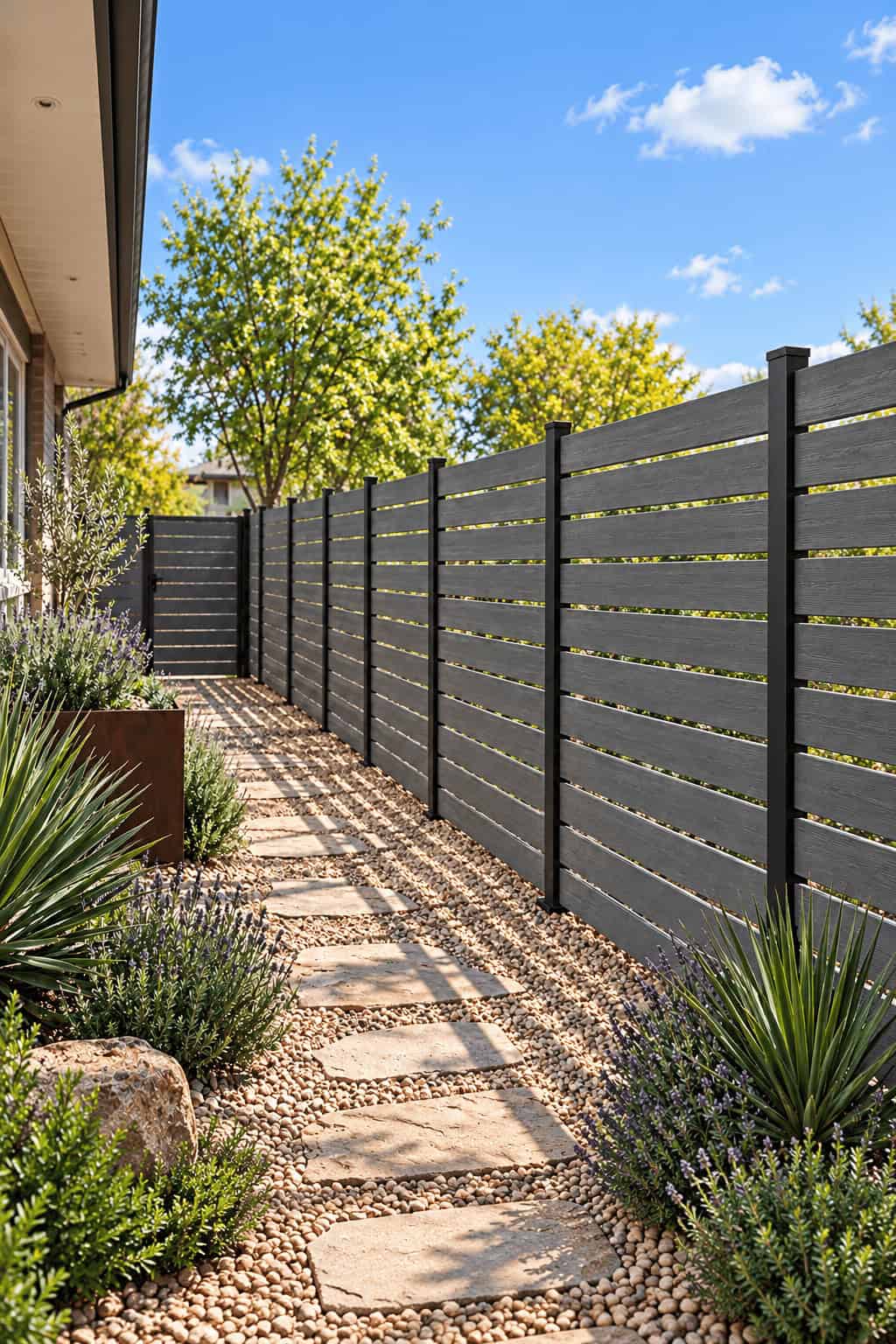
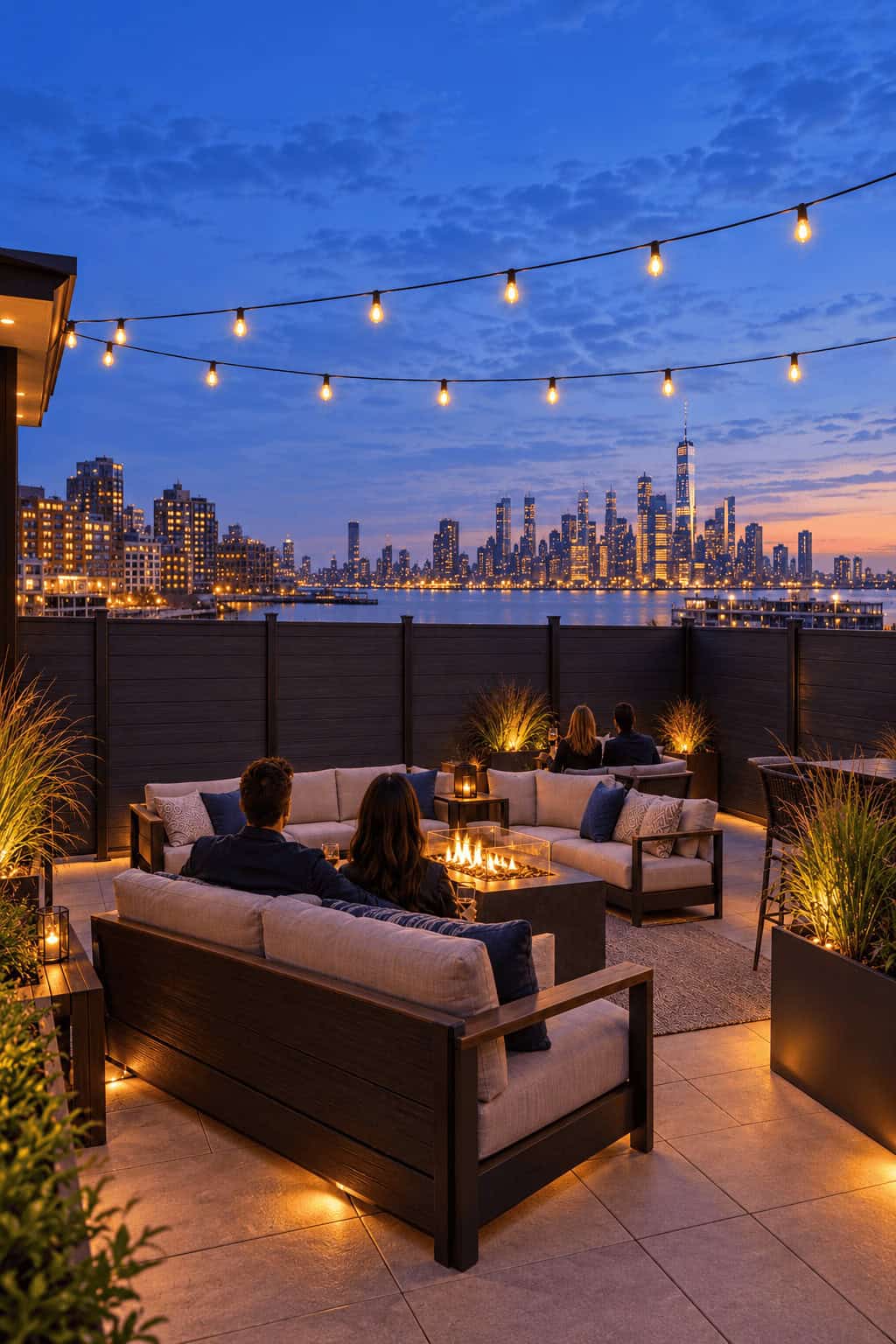


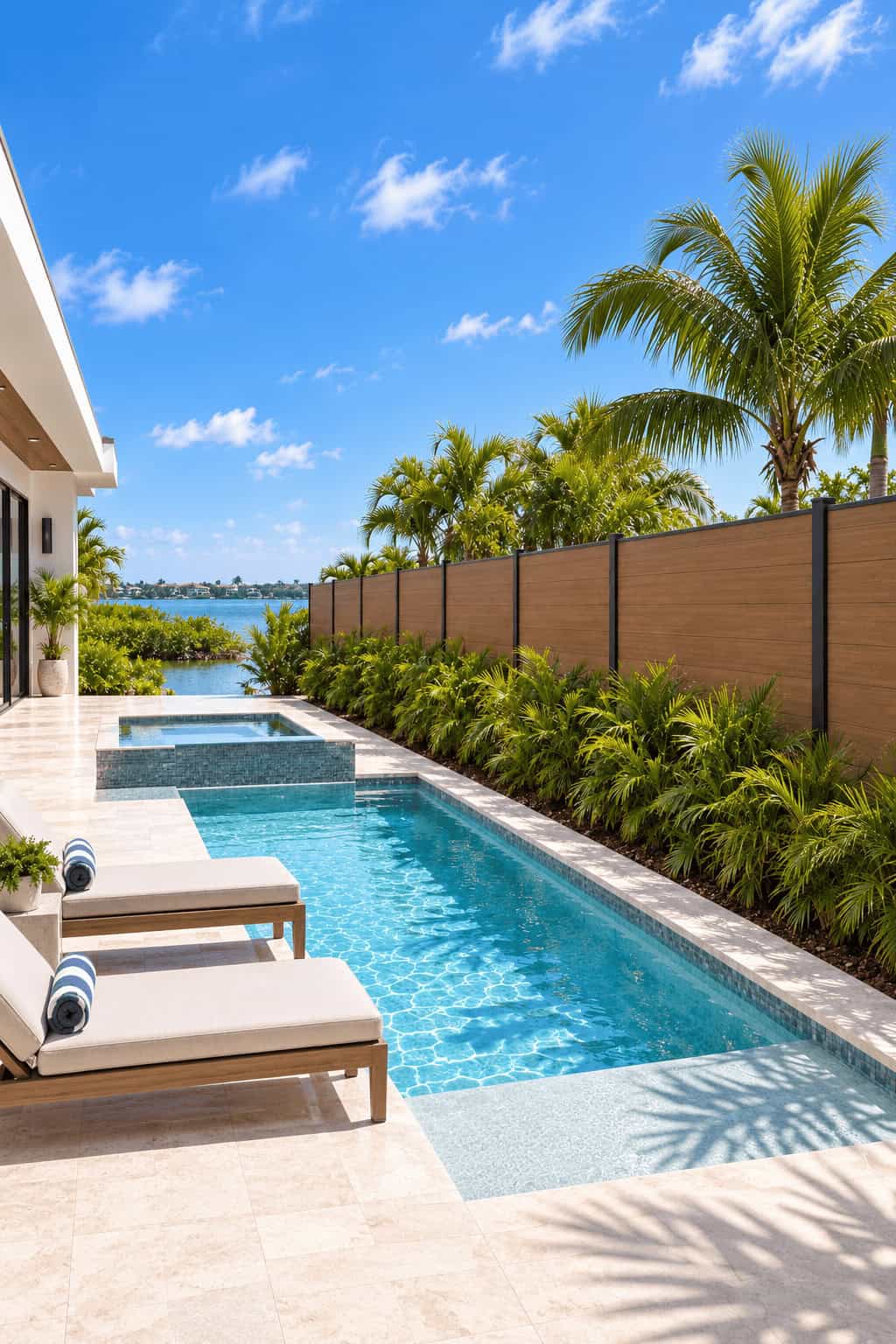

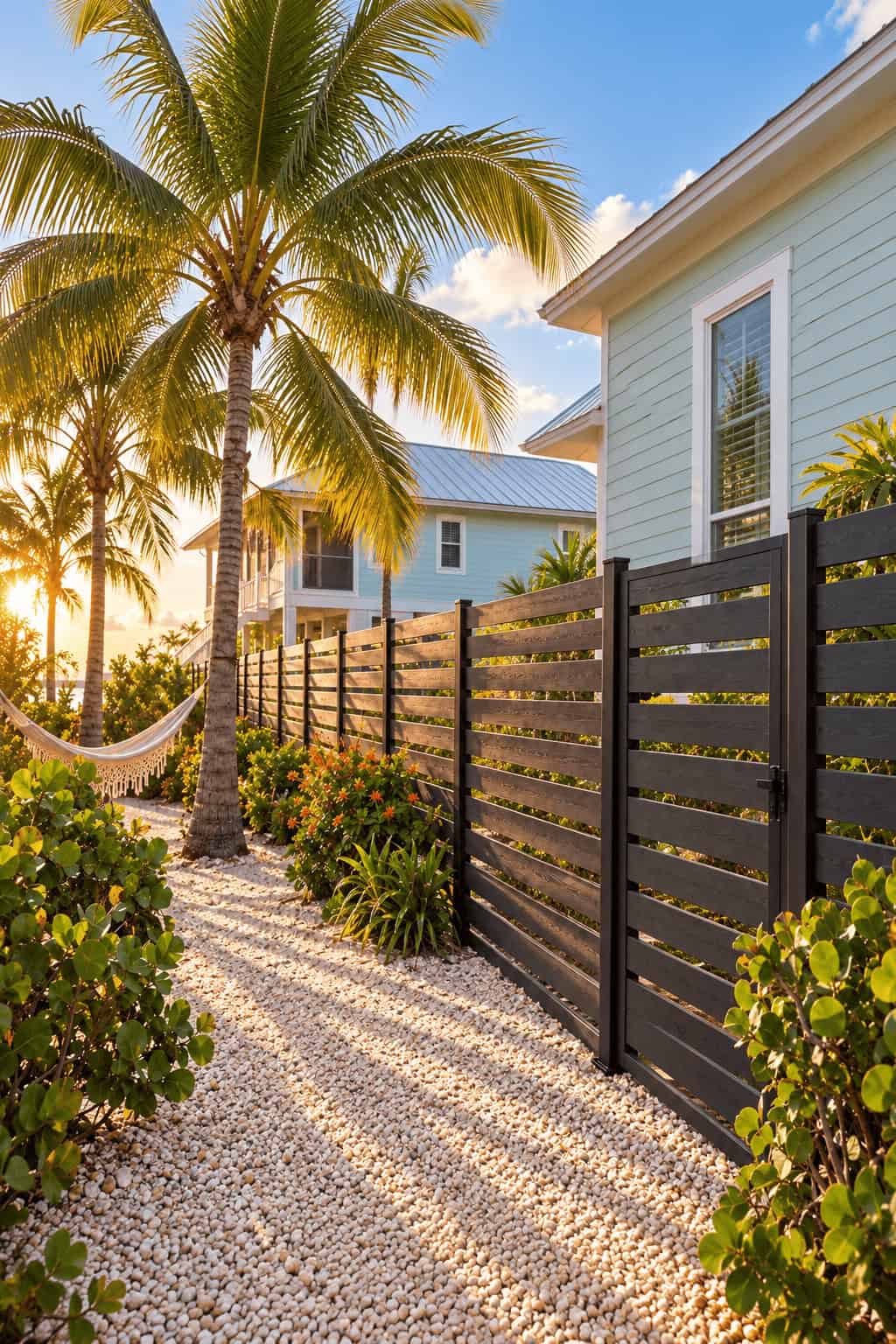


Black, Brown or Gray, Each With Wood Grain
Black
Contemporary and graphic. Pairs well with aluminum structures and architectural lighting.


Brown
The warmest tone of the three and the closest to natural timber.


Gray
Neutral and adaptable, sitting between traditional and modern. A quiet backdrop for planting.


Swatches and photographs are illustrative, since screens and cameras shift color. Physical board samples are the reliable way to choose. Darker colors run warmer in direct sun.
One System, Several Ways to Build a Fence Line
Privacy
Solid boards with no gap give full visual screening from neighbors and the street. Six feet is a common height where local rules allow it.
Semi-Privacy
A small, consistent gap lets light and air pass while still screening most of the view, and it reduces wind load on the panels.
Horizontal
Boards run parallel to the ground for a linear, architectural look suited to contemporary and mid-century homes.
Decorative and Picket
Open layouts mark a boundary and add character along front yards and gardens without closing off the view.
Pool Barrier Layouts
Open or semi-privacy panels can be specified toward pool barrier requirements. Height, spacing and gate hardware follow the code adopted by the local building department.
Mixed Runs
Styles can change along a single fence line, for example full privacy at the rear and a lighter layout toward the street.
Height, setbacks and permitted styles are set by the municipality and, where one exists, the homeowners association. Those are separate approvals, and both are confirmed for the address before installation is scheduled.
Boards Seat Into the Posts, Not Through Them
Each post is routed with channels. Rails insert into the channels, panels connect to the rails, and boards slide into place, which leaves a fastener-free face on the finished fence. It is a tidier look and one less thing to check years from now.
- Insert the rail into the post channel.
- Connect the panel to the rail.
- Fit post covers and caps to finish.
What happens below grade matters more to the life of a fence than anything visible. Post depth and footing specification are set by the soil, the frost depth and the requirements at each property, and frost depth in particular varies by jurisdiction. The local building department is the authority on the figure that applies to a given address.


Six Components, Specified Together
Every composite fence package includes the full set of parts needed for a sturdy, consistent installation. Each component is chosen to fit the others, so the fence performs and looks like one system.
Fence Posts
The structural backbone, routed with channels that receive the plug-in rails.
Wood Grain Composite Boards
Co-extruded WPC boards in the chosen color family and configuration.
Post Bases
Hardware that anchors posts wherever the installation calls for a base.
Post Caps
A finished top that sheds moisture from the post end. Solar caps are an optional upgrade.
Post Covers
Clean sleeves that finish each post to match the boards.
Concrete Anchor Bolts
Fasteners that tie the bases to concrete, specified for the site.
Optional Solar Post Cap Lights

Fit
Sized for 2.75 inch by 2.75 inch posts. The same caps also suit deck posts, porch posts, pillars and mailbox posts.
Solar Powered
An integrated solar panel charges in daylight and gives soft perimeter light after dark. No wiring is required, and the ABS housing carries a UV-resistant finish.
Weather Rating
Rated IP44, which means splash resistant. That covers rain on the cap, but it is not a waterproof or storm-proof rating. The cap also covers the post top, shedding water away from the post end.
Light output and run time depend on sunlight and season. For lighting designed as a system across the whole yard, see landscape lighting.


What Is Wood Plastic Composite?
A Blend of Wood and Polymer
Wood plastic composite combines wood fibers with polymer resins. The result carries the look and texture of timber while resisting the rot, insects and moisture that shorten the life of a wood fence.
Why the Shell Matters
In a co-extruded board, the composite core is encased in a polymer shell during manufacturing. The shell covers the core evenly, which is what gives the board its resistance to scratches, stains, mildew and weather.
Co-Extruded vs. Mono-Extruded
First-generation mono-extruded boards left wood fiber exposed at the surface, where it could absorb water and wear. Co-extrusion closes that surface, and it is the reason current composite fencing holds its appearance far longer.
Comparing Materials
How composite compares with wood, vinyl, aluminum, wrought iron, steel and chain link, along with panel systems, post depth and cost drivers, is covered in the composite fencing guide.
How a Fence Project Unfolds
1. Confirm the Line
Property lines, utilities, permits and any association review come first, and all are confirmed before a post goes in.
2. Choose and Specify
Color, configuration, height, gates and post specification are set for the site at the assessment.
3. Set and Assemble
Posts are set and allowed to cure, then rails, boards, covers and caps go in. Timing depends on the length of the run and the site.

Plan the Boundary With the Rest of the Yard
The best fences meet the hardscape cleanly, frame the structures inside them and carry light into the evening. Pavers can run right up to the fence line, an aluminum pergola can turn a fenced corner into an outdoor room, and landscape lighting can trace the perimeter after dark.
Planned together, these become Complete Outdoor Living Systems: one design and one build rather than a series of separate projects.
Frequently Asked Questions
WPC stands for wood plastic composite, a blend of wood fibers and polymer resins. In a co-extruded board the composite core is wrapped in a polymer shell during manufacturing, giving the look of wood with far less upkeep.
Co-extruded boards are designed to resist rot, insects and moisture and to tolerate sun and seasonal change. No fence is indestructible, and long-term results depend on the product, the installation and the conditions at the property.
A rinse or wash with a garden hose and mild soap once or twice a year, with a soft brush for stubborn spots. Abrasive cleaners and steel wool should be avoided. Staining, sealing and painting are not part of the routine.
Yes. Black, brown and gray color families combine with privacy, semi-privacy, horizontal and open layouts, and styles can change along one run. Final options depend on current availability, the site and local rules.
Privacy configurations use solid boards with no gap for complete visual screening. Semi-privacy layouts keep a small gap for light and airflow while still blocking most of the view.
Composite generally costs more to install than pressure-treated wood. The fairer comparison runs over the life of the fence: wood carries a recurring cycle of staining, sealing and board replacement that composite does not, a fence that holds its color continues to present well at resale, and seasons not spent on maintenance are seasons spent using the yard. A site assessment prices the actual footage, height, style and gates.
Co-extruded boards avoid the splinters associated with weathered lumber and are designed to resist insect damage. Height, ground clearance and gate hardware should be planned for the household, and dark surfaces can become hot in direct sun.
Often they do. Height, setbacks, materials and colors can be regulated by the municipality and by a community association, and the two approvals are separate. Both are confirmed for the property before work begins.
Timing depends on the length of the run, the number of gates, site access and the cure time for post footings. A schedule is set once the site assessment confirms the layout and approvals.
The composite fencing guide compares wood, vinyl, aluminum, wrought iron, steel and chain link, and covers installation, cost drivers and maintenance in full.
Ready to Plan the Fence Line?
A site assessment covers the property line, the approvals that apply, the look the fence should have and the job it needs to do. Backyard Paradiso installs composite fencing across the markets it serves. Consultations are available by appointment.