
Outdoor Living in Naples, FL
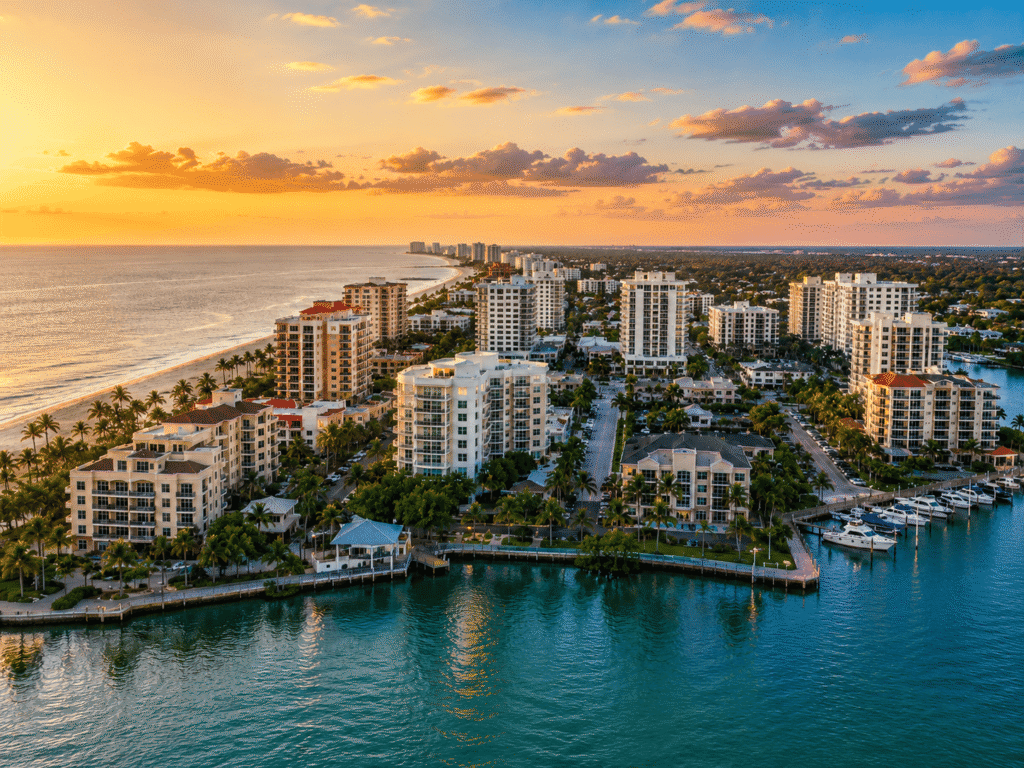
Complete outdoor living design and installation across Naples and the Southwest Florida Gulf Coast.
Engineered to Florida Building Code wind loads, Collier County permit standards, and the architectural review requirements of Naples’ premier communities.
Backyard Paradiso designs and installs complete outdoor living environments across Naples and the broader Southwest Florida Gulf Coast. From the North Naples office on J and C Boulevard in unincorporated Collier County — one of seven service locations — our service footprint extends across three counties: south through the City of Naples, Marco Island, and the coastal Collier County communities of Pelican Bay, Pelican Marsh, Vanderbilt Beach, Lely Resort, and the Naples Park and Golden Gate corridors; north into Lee County across Bonita Springs, Estero, Fort Myers, Fort Myers Beach, and Cape Coral; and up the Gulf Coast into Charlotte County across Punta Gorda and Port Charlotte. The conditions that shape outdoor living here — hurricane wind loads under the Florida Building Code, subtropical humidity and UV intensity, salt air exposure on coastal properties, Special Flood Hazard Area elevation requirements, and the high bar set by Naples’ premier community ARCs — are consistent across the region. The permit authority, design review process, and specific flood zone framework vary by jurisdiction.
This is the complete outdoor living approach applied to Southwest Florida conditions: motorized louvered pergolas with PE-stamped drawings calibrated to the appropriate design wind speed for the specific property location; travertine paver patios that stay cool underfoot in direct Gulf sun and manage drainage through the summer wet season; composite decks built with stainless or hot-dipped galvanized fasteners that resist salt air corrosion; outdoor kitchens integrated with the Florida lanai pattern that has defined Southwest Florida residential architecture for decades; and landscape lighting designed around the evening hours that are genuinely the best time to use outdoor space in this climate.
The conditions that shape outdoor living in Southwest Florida
Four environmental and regulatory inputs define how outdoor living projects are engineered across the Gulf Coast. They show up in every specification we write for a Naples-area property.
Florida Building Code wind loads and hurricane engineering
The Florida Building Code 8th Edition, effective December 31, 2023, adopts ASCE 7-22 as the standard for wind load calculations. Collier County is not within the High-Velocity Hurricane Zone that applies to Miami-Dade and Broward — that distinction matters — but design wind speeds across Collier, Lee, and Charlotte County fall in the 150 to 170 mph range depending on the specific property location, risk category, and exposure. These are among the most demanding wind load specifications in the continental United States, and the engineering consequences are substantive: post sizing, footing design, frame connections, and the anchoring detail at every structural interface are calibrated to wind loads that interior-state markets don’t approach.
Every permanent outdoor structure we install across the three-county footprint is engineered with PE-stamped drawings — structural calculations prepared by or under the direct supervision of a Professional Engineer licensed in Florida, as required by state law. This is not an optional upgrade. It is the documentation the building department requires to issue a permit, and it is the specification the engineering actually demands. Aluminum pergola systems installed to the correct wind load rating perform reliably through hurricane conditions when the louvres are closed to their watertight position and secondary wind bracing is properly engaged. Aluminum systems installed without the correct engineering will not.
Coastal exposure, humidity, and marine-grade hardware
Salt air, subtropical humidity, and UV intensity are the three environmental inputs that determine which materials perform well in Southwest Florida and which don’t. Standard galvanized fasteners corrode at the coast within a few years. Painted steel oxidizes. Lower-grade aluminum anodizing chalks and fades. Wood, untreated or poorly treated, decays through a combination of humidity, insect pressure, and moisture cycling that no interior market accelerates the way this climate does.
The specification response is straightforward but non-negotiable for coastal properties: stainless steel or hot-dipped galvanized fasteners throughout the frame-to-substructure and substructure-to-deck-board connections. Powder-coated aluminum framing with UV-stabilized coatings rated for coastal exposure. Marine-grade hardware on any exposed fitting. Composite decking with co-extruded polymer shells rather than mono-extruded alternatives that absorb atmospheric moisture at the cut ends. Travertine and porcelain paver materials that handle humidity better than some concrete products do over a 20-year horizon.
The Special Flood Hazard Area and elevation requirements
Most of Naples proper, much of Marco Island, and significant portions of coastal Collier, Lee, and Charlotte County sit within Special Flood Hazard Areas as mapped by FEMA. The City of Naples specifically requires an Elevation Certificate or a completed FEMA form with every permit application for work within the SFHA. This affects outdoor living projects more than homeowners often realize — raised lanais, elevated decks, pergola post footings, and outdoor kitchen slab configurations all interact with flood zone elevation requirements, and the structural specification has to accommodate them from the initial design rather than as a correction at permit review.
For properties in the AE, VE, or X (shaded) flood zones, we incorporate the elevation requirements into the design from the site visit forward. This is particularly relevant for deck and pergola projects on waterfront and near-waterfront lots in Port Royal, Aqualane Shores, The Moorings, Vanderbilt Beach, Park Shore, and the coastal corridors of Marco Island and Bonita Springs.
HOA architectural review as a named procedural step
Naples’ premier communities maintain some of the most rigorous architectural review processes in the Southeast. Pelican Bay, Port Royal, Grey Oaks, Mediterra, Bay Colony, Quail West, Pelican Marsh, and Lely Resort each operate an ARC or Design Review Committee that reviews proposed outdoor structures for material, color, scale, placement, lighting, and landscape integration before the municipal permit process begins. The ARC approval timeline typically adds two to six weeks to the overall project schedule, and the documentation requirements are substantive — elevations, materials samples or specifications, site plans showing placement relative to setbacks and neighboring properties, and in some communities, evidence of architectural compatibility with the home’s existing design language.
We handle ARC submission documentation as a standard part of the project scope across the named communities. Filing for ARC approval before finalizing engineering prevents the scenario of having drawings PE-stamped to a design that the community subsequently requires to be modified.
The three-county service footprint
Backyard Paradiso’s Naples office serves a regional footprint that spans three counties — Collier, Lee, and Charlotte. Each carries its own permit authority, its own code enforcement approach, and its own dominant project context. The engineering specifications (FBC 8th Edition wind loads, PE-stamped drawings, marine-grade hardware on coastal properties) are consistent across the region. The procedural track varies.
Collier County and the City of Naples
Our core market. Within Collier County, two permit authorities operate in parallel: unincorporated Collier County processes permits through the Growth Management Department’s Division of Building Plan Review and Inspection at 2800 North Horseshoe Drive in Naples. The City of Naples — a separate incorporated municipality covering Old Naples, Port Royal, Aqualane Shores, The Moorings, Coquina Sands, and the downtown district south of Pine Ridge Road — handles permits through its own Building Department at 295 Riverside Circle. Both are under FBC 8th Edition, but the application portals, fee schedules, and review workflows are distinct. We route each project through the authority appropriate to its specific address.
Marco Island is its own incorporated city within Collier County, with its own Building Services Department and distinct permit process. The coastal exposure, flood zone prevalence, and hurricane engineering requirements on Marco Island are among the most demanding in the three-county footprint. Projects here require particular attention to elevation, wind, and material specifications calibrated to direct Gulf exposure.
Lee County — Bonita Springs, Estero, Fort Myers, Cape Coral, and Fort Myers Beach
North of Collier County, Lee County covers Bonita Springs, Estero, Fort Myers, Fort Myers Beach, Cape Coral, and North Fort Myers. Lee County Community Development handles unincorporated permits; Bonita Springs, Estero, Fort Myers, Fort Myers Beach, and Cape Coral each maintain their own municipal building departments. Project character varies across these submarkets more than any single description captures: Bonita Springs and Estero have become meaningful luxury submarkets in their own right with active HOA communities and premium outdoor living work. Fort Myers carries the regional urban center character. Cape Coral’s distinctive waterfront canal geometry — more miles of canal than any other city in the world — creates a specific dock, seawall, and outdoor living context. Fort Myers Beach is tourism-oriented with a project mix that includes short-term rental outdoor improvements alongside traditional residential work.
Charlotte County — Punta Gorda and Port Charlotte
At the northern edge of the service footprint, Charlotte County covers Punta Gorda and Port Charlotte. Charlotte County Community Development handles unincorporated permits; Punta Gorda runs its own municipal process. This is coastal Florida at a different density than Naples — fewer ultra-luxury communities, more established waterfront single-family stock, and a project context that leans toward replacement and renovation of 1980s-and-newer outdoor spaces rather than ground-up luxury new construction.
Nearby markets and approximate distance from the J and C Boulevard office
The full regional reach, with each surrounding market’s typical character. Distance is measured from the Naples office in the 34109 ZIP.
| Market | Distance | Character |
|---|---|---|
| Naples Park, FL | 3 mi | Adjacent community |
| Golden Gate, FL | 3 mi | Adjacent community |
| Lely Resort, FL | 5 mi | Residential community |
| Pelican Marsh, FL | 8 mi | Residential community |
| Vanderbilt Beach, FL | 9 mi | Coastal community |
| Marco Island, FL | 13 mi | Island / resort market |
| Bonita Springs, FL | 22 mi | Suburban city |
| Estero, FL | 24 mi | Suburban growth market |
| Lehigh Acres, FL | 33 mi | Growth suburb |
| Fort Myers, FL | 35 mi | Primary regional city |
| Cape Coral, FL | 40 mi | Large residential market |
| Fort Myers Beach, FL | 41 mi | Tourism market |
| North Fort Myers, FL | 45 mi | Residential market |
| Punta Gorda, FL | 45 mi | Coastal city |
| Port Charlotte, FL | 50 mi | Regional market |
All of these markets are inside the service footprint. Engineering specifications (FBC 8th Edition wind loads, PE-stamped drawings, coastal marine-grade hardware, elevation requirements for flood zone properties) are consistent across the list; the permit authority, ARC framework, and flood zone map vary by jurisdiction and by specific property location.
The complete outdoor living approach in Naples
The projects we install across Southwest Florida cover the full service range: motorized louvered pergolas, travertine and porcelain paver patios, outdoor kitchens, composite decks, landscape and coastal lighting, fencing, glass railings, motorized zip screens, retractable awnings, artificial turf, batting cages, and expandable home structures. The projects we see most frequently in this market:
Pergola-and-lanai extensions on pool homes. The Southwest Florida lanai — the screened covered patio at the back of the house that functions as a genuine second living room — is the baseline residential outdoor living pattern here. Adding a motorized louvered pergola beyond the existing lanai to create an additional outdoor room, often with a pool-side orientation, is the most common complete-build scope we see. The pergola gives control over sun and rain that the screened lanai can’t provide; the combination extends usable outdoor space meaningfully without requiring changes to the existing lanai structure.
Travertine pool surrounds and patio integration. Travertine is the dominant premium paver material in Naples and has been for decades. The material’s heat-reflective properties — it stays meaningfully cooler underfoot in direct Gulf sun than darker or denser alternatives — its natural non-slip surface texture, and its visual compatibility with coastal and Mediterranean architectural language make it the default specification for pool surrounds and patios in the premium communities. Porcelain large-format pavers have grown as a contemporary alternative for homes with modern architectural programs where clean, minimal surface joint lines suit the design direction better than travertine’s natural variation.
Outdoor kitchens built into the lanai pattern. Outdoor cooking is a year-round proposition in Southwest Florida, and the outdoor kitchen is more than an amenity here — it’s a working room. Integration with the existing lanai or covered pergola, utility routing appropriate to the slab conditions, ventilation design that works with the humidity, and cabinet and counter specifications that handle the coastal environment without visible degradation are the core design considerations. We coordinate with the electrical, plumbing, and gas trades under the same project scope to produce a finished installation that reads as intentional rather than as an assembly of separate contractors.
Composite decks for elevated coastal properties. Properties with raised foundations — common in flood-zone areas across Naples, Marco Island, and the Lee County coastal corridor — frequently include elevated composite decking at the living level of the home. The moisture resistance advantage of co-extruded WPC composite over natural wood is most pronounced in Southwest Florida’s climate, and the surface stays comfortable underfoot through conditions that cycle repeatedly between Gulf humidity and afternoon rain. Glass railing systems are a natural pairing for elevated decks with water or preserve views.
Coastal landscape and permanent lighting. The evening hours — when the temperature drops, the humidity eases, and the light changes across the Gulf — are the best hours to use outdoor space in Naples. Professional landscape lighting combined with permanent architectural roofline lighting defines how the property presents after sunset. For HOA communities with evening lighting standards, programmed coordination across landscape, architectural, and pergola-integrated lighting produces a result that meets the community aesthetic while serving the homeowner’s actual evening use patterns.
Permits, ARCs, and the jurisdictional landscape
Two regulatory tracks run through almost every outdoor living project in Southwest Florida. One is the municipal or county permit appropriate to the jurisdiction. The other is the HOA architectural review process that governs most of the premium residential communities across the region.
Municipal and county permits
Pergolas, decks, outdoor kitchens with utility connections, and most permanent structures require building permits across the three-county footprint. The specific permit authority depends on where the property sits. Unincorporated Collier County: the Growth Management Department’s Division of Building Plan Review and Inspection. City of Naples: the Building Department at 295 Riverside Circle. Marco Island: the city’s Building Services Department. Bonita Springs, Estero, Fort Myers, Fort Myers Beach, Cape Coral, Punta Gorda: each runs its own municipal department. Lee County and Charlotte County handle their respective unincorporated areas. Review timelines run two to four weeks for standard residential structures in most jurisdictions, with the permit documentation including PE-stamped structural drawings, site plans, elevation certificates where applicable, and product approval documentation for systems under Florida’s NOA and state approval frameworks. Backyard Paradiso prepares the documentation and manages the permit review in each jurisdiction where we work.
HOA architectural review in the premium communities
The named communities — Pelican Bay, Port Royal, Grey Oaks, Mediterra, Bay Colony, Pelican Marsh, Quail West, Lely Resort, Mediterra — each operate an architectural review committee with documented design standards and submission requirements. ARC review typically precedes the municipal permit process; approval from the community is a prerequisite for the permit application in most configurations. Standards vary by community but commonly address material selection (aluminum finish color, paver material and pattern, composite decking profile and tone), scale and placement (structure height, setback distances, proximity to neighboring properties), lighting (fixture selection, color temperature, programming, seasonal and holiday lighting limitations), and in some communities, landscape integration requirements that govern how the structure relates to the surrounding planting.
We prepare the ARC submission package — elevations, material specifications, site plans, sample boards where required — as a standard part of every project in a community with active architectural review. Filing for ARC approval before finalizing engineering prevents the scenario of rework to PE-stamped drawings after the community requires a change.
The value of a complete outdoor living investment in Naples
Rather than publishing a dollar range that would only be meaningful in the context of a specific project scope, it’s more useful to understand how outdoor living investment returns value in three distinct ways — because the return isn’t a single number. It’s a combination of what the improvement does for the property’s market value, what it adds to the home’s functional footprint, and the quality-of-use return that’s specific to Southwest Florida’s year-round outdoor climate.
Resale recovery in a luxury-comparable market. Research from the National Association of Realtors finds that outdoor living improvements recover 50–100% of their investment at resale, with patios, decks, and landscape improvements routinely at the upper end. In Naples specifically, the combination of a strong seasonal-resident population, a high concentration of donor-supported civic and arts institutions, and the architectural standards that have shaped communities like Port Royal and Pelican Bay over decades has produced a market where outdoor environments are evaluated as a core component of property value rather than as an optional amenity.
Functional square footage in a year-round climate. An outdoor living environment adds hundreds or thousands of square feet of usable space to a home at a per-square-foot cost meaningfully lower than an interior addition. In Southwest Florida, where the outdoor space is comfortable a majority of the calendar — with the wet season’s afternoon rain the primary constraint rather than winter cold — the functional return on that added footprint is exceptional relative to seasonal markets. An outdoor kitchen is used year-round. A covered pergola-and-lanai combination serves as genuine second living room capacity. Elevated decks with Gulf or preserve views become the primary entertaining space. The usable-hours math works differently here than in any of the interior markets we serve.
Engineering quality as long-term protection. The return profile specific to Southwest Florida involves hurricane survivability. A structure engineered and built to FBC 8th Edition wind load specifications, with PE-stamped drawings and marine-grade hardware, will come through the hurricane conditions that periodically affect the Gulf Coast. A structure that cut corners on engineering or materials will not. The incremental cost of correct specification is a small fraction of the cost of replacement after a significant wind event — and the property insurance implications of properly permitted, engineered, and documented outdoor structures are substantive.
What shapes the investment in this market specifically. Three regional factors affect how Naples-area projects are specified and priced:
- PE-stamped engineering to Florida Building Code wind loads — the structural documentation and the component sizing calibrated to 150–170 mph design wind speeds add meaningfully to both design cost and material cost relative to interior-state markets. This reflects what the installation requires to perform in the climate and to pass Florida permit review.
- Marine-grade hardware and coastal-rated finishes — stainless steel or hot-dipped galvanized fasteners, UV-stabilized and salt-air-rated powder coatings, and corrosion-resistant component specifications carry modest premiums over baseline alternatives. The 20-year performance difference in a coastal environment justifies the specification.
- ARC approval timelines and documentation — projects in Naples’ premier communities run on a combined ARC-plus-permit timeline that’s typically longer than municipal-permit-only projects, and the documentation package is more involved. This affects scheduling more than price materially; we incorporate both tracks into the project timeline from the initial design conversation.
Accurate project investment figures for a specific scope come from a site assessment rather than a published range — the variables that determine what a project actually costs are too specific to the property, the jurisdiction, the ARC community, the flood zone, and the feature set to generalize usefully. The site assessment is free and produces a complete project quote based on the actual scope of work.
Frequently asked questions about outdoor living in Naples
Does a pergola in Naples need to be engineered for hurricane wind loads?
Yes. Every permanent outdoor structure installed in Collier, Lee, or Charlotte County is engineered to the Florida Building Code 8th Edition wind load specifications, which fall in the 150–170 mph design wind speed range depending on the specific property location and exposure category. The structural documentation is required to carry a Florida-licensed Professional Engineer’s stamp as a condition of permit issuance. This applies to attached and freestanding aluminum pergolas, covered patio structures, and any permanent pergola variant. Aluminum systems from Backyard Paradiso are engineered specifically to these specifications and close to a watertight, wind-resistant position when the louvres are sealed for a storm event.
Which permit authority handles my Naples-area project?
It depends on where the property sits. City of Naples addresses — Old Naples, Port Royal, Aqualane Shores, The Moorings, Coquina Sands — route through the City of Naples Building Department at 295 Riverside Circle. Unincorporated Collier County addresses — Pelican Bay, Pelican Marsh, Vanderbilt Beach, Lely Resort, Naples Park, Golden Gate, and the North Naples corridor where our office sits — route through the Collier County Growth Management Department at 2800 North Horseshoe Drive. Marco Island operates its own Building Services Department. Bonita Springs, Estero, Fort Myers, Cape Coral, Fort Myers Beach, and Punta Gorda each have their own municipal departments, and Lee and Charlotte Counties handle their respective unincorporated areas. We confirm the appropriate authority at the initial site assessment based on the specific property address.
Do I need ARC approval before the municipal permit in a community like Pelican Bay or Port Royal?
In most cases, yes. Communities with active architectural review — including Pelican Bay, Port Royal, Grey Oaks, Mediterra, Bay Colony, Pelican Marsh, Quail West, Lely Resort, and most of the premium gated communities across the three-county footprint — require ARC approval before the municipal or county permit application. The ARC package typically includes elevations, material specifications, site plans, and in some communities, material samples or sample boards. Review timelines run two to six weeks depending on the community and the project scope. We prepare the ARC submission as part of the standard project scope.
How does the Special Flood Hazard Area affect my outdoor living project?
If the property is in a FEMA-mapped Special Flood Hazard Area — most of Naples proper, much of Marco Island, significant portions of coastal Collier, Lee, and Charlotte County — the permit application requires an Elevation Certificate or equivalent documentation, and the design needs to accommodate the applicable flood zone elevation requirements. This affects outdoor living more than homeowners often expect: raised lanais, elevated decks, pergola post footings, and outdoor kitchen slab configurations all interact with the flood zone elevation. We incorporate the flood zone context into the design from the site assessment forward rather than as a correction at permit review. FEMA’s Flood Map Service Center provides the authoritative flood zone designation for any specific property.
Why is travertine the dominant paver material in Naples, and is it always the right choice?
Travertine dominates the Naples premium paver market because its material properties are genuinely well-suited to the climate and the architectural context. It stays meaningfully cooler underfoot in direct Gulf sun than darker or denser alternatives, its natural surface texture provides reliable wet traction around pools, and its visual character integrates with the coastal and Mediterranean architectural language that runs through much of Naples residential design. It isn’t universally the right choice. Contemporary architectural programs increasingly specify large-format porcelain for the clean joint lines and minimal surface pattern that porcelain offers in a way travertine can’t. Concrete pavers remain appropriate for non-premium applications where the aesthetic and cost targets point to them. The material conversation is one we have in detail during the initial design visit, calibrated to the home’s architectural direction and the specific use context.
What maintenance do outdoor living materials require in Southwest Florida’s coastal climate?
Less than homeowners often assume, provided the materials were specified correctly for the environment. Powder-coated aluminum pergola frames need periodic rinsing with fresh water — more frequently on properties with direct Gulf exposure — to remove salt deposits, plus occasional lubrication of the motorized louvre mechanism. Co-extruded WPC composite decking requires washing with soap and water once or twice a year and no additional treatment. Travertine pavers benefit from periodic resealing on a three-to-five-year cycle to preserve stain resistance. Porcelain pavers require essentially no sealing or resurfacing maintenance. Marine-grade fasteners and stainless hardware do not need protective treatment beyond normal rinsing. The maintenance load is modest compared to what wood-based or corrosion-vulnerable materials would demand in this environment.
What’s the outdoor season like in Naples?
Naples offers genuinely year-round outdoor use. The wet season’s afternoon thunderstorms from mid-June through September are the primary weather constraint rather than winter cold; motorized louvered pergolas and zip screen systems manage that constraint effectively, closing for a storm that passes in thirty to sixty minutes and reopening afterward. The seasonal-resident pattern shapes how the calendar reads in practice — Naples’ part-time residents are typically in town from November through April, which makes those months the peak usable season for outdoor space and the period when most outdoor entertaining, family visits, and outdoor-room use is concentrated. Summer is genuinely usable, particularly in the morning and evening hours and under covered structures with airflow. The combination of year-round usability and the seasonal-resident calendar means that outdoor space designed for adaptability — variable shade, enclosable screens, integrated lighting — gets used far more hours per year than outdoor space designed for a single weather condition.
Backyard Paradiso — Naples Office
Phone: (239) 474-4569
Hours: By appointment
Email: office@backyardparadiso.com
Serving: Naples, Naples Park, Golden Gate, Lely Resort, Pelican Marsh, Vanderbilt Beach, Marco Island, Bonita Springs, Estero, Lehigh Acres, Fort Myers, Cape Coral, Fort Myers Beach, North Fort Myers, Punta Gorda, Port Charlotte, and the broader Southwest Florida Gulf Coast
The design conversation for your Naples outdoor project
Every Backyard Paradiso project in the Naples area starts with a free site assessment at the property. The assessment covers the home’s orientation, elevation, and flood zone context, the lot’s drainage and soil conditions, the applicable jurisdictional permit authority, the HOA or ARC framework for the specific community, the homeowner’s design priorities and material preferences, and the realistic phasing of a project that fits budget and timeline. We’ll produce a design concept and project quote based on the actual scope of work — including the PE engineering, the ARC submission, and the permit documentation — not a square-footage formula.