
Pavers: The Complete Guide for Homeowners
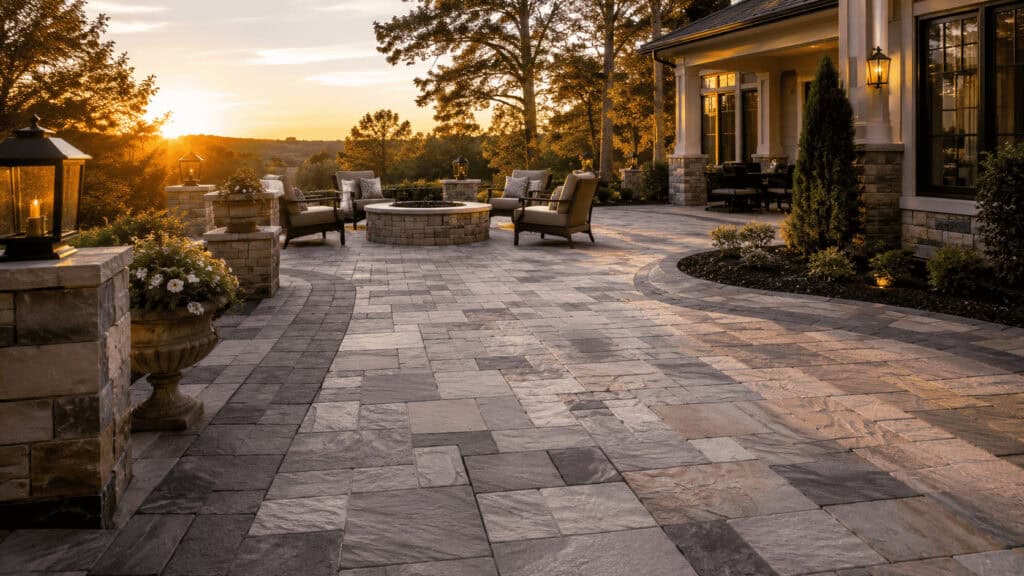
A well-designed paver surface is one of the most visually transformative improvements available for a residential outdoor space — and one of the most consequential installation decisions a homeowner can make, because the difference between a paver surface that stays level and beautiful for twenty-five years and one that starts heaving, cracking, and shifting within five winters is almost entirely invisible at the time of installation. It lives in the base preparation — the compacted aggregate layers beneath the surface that no one photographs for the project gallery.
This guide covers what an informed paver decision requires: what the main paver materials are and how they genuinely compare, what the right applications are for each type, what design patterns and configurations actually look like in practice, why base preparation is the single most important specification in any paver installation, what the installation process involves from site assessment through final joint sealing, what realistic project costs look like, and what the specific conditions across the markets Backyard Paradiso serves mean for how paver installations are designed and built. Whether the project is replacing a cracked concrete slab, installing a new patio from scratch, building a pool surround, or paving a driveway, the information here supports a decision that performs correctly over the full lifespan of the installation.
Pavers vs poured concrete: the comparison most homeowners need first
Before getting into paver types, patterns, and installation details, the threshold question worth answering is whether pavers are the right choice at all — because poured concrete is the primary alternative for patios, driveways, and walkways, and it is typically cheaper upfront.
Where poured concrete has the advantage
Upfront cost. A poured concrete slab typically has a lower installed cost per square foot than pavers in the same application. That gap narrows in freeze-thaw markets where concrete’s cracking vulnerability requires heavier base preparation and expansion joints, but it is real in most scenarios. If the budget is fixed and the square footage is the priority, poured concrete covers more ground per dollar.
Where pavers outperform concrete
Crack resistance. Poured concrete cracks. In freeze-thaw markets this is a near-certainty — thermal expansion and contraction of a large monolithic slab creates stress that the concrete relieves through cracking, typically at control joints but also at random locations as the slab ages. Pavers, as individual units, accommodate the same thermal and settlement movement without cracking — the movement distributes across the joints between units rather than concentrating in one place.
Repairability. A cracked concrete slab can be patched, but patches are visible and concrete’s color weathers inconsistently. Individual pavers can be removed and replaced exactly — the repair is invisible. This is particularly valuable in driveways and areas where utility companies periodically need to access underground lines.
Aesthetic range. Stamped and colored concrete replicates paver and natural stone appearances competently but identifiably. Genuine pavers offer material variation, surface texture, and aging character that stamped concrete does not match at close inspection.
Longevity. A properly installed paver surface in a climate-appropriate material can last 20 to 50 years with minimal maintenance. Poured concrete in freeze-thaw markets typically requires resurfacing, significant patching, or replacement substantially sooner.
Drainage. Standard poured concrete is impermeable — water runs off the surface. Pavers installed with permeable jointing or gap spacing allow water infiltration into the base, which reduces runoff. This is increasingly relevant in municipalities with stormwater management requirements.
Paver materials: what the options actually are
The residential paver market offers more genuine choices than most buyers realize when they start the process. Each material has legitimate advantages, real limitations, and specific applications where it performs best. Understanding the differences before collecting quotes prevents the common mistake of comparing quotes that are not specifying the same product.
Concrete pavers
Concrete pavers are manufactured from a mixture of Portland cement, aggregate, and pigment pressed into consistent shapes under high pressure. They are the most widely used paver material in residential applications — available in the broadest range of shapes, sizes, colors, and surface textures of any paver type, and typically the most cost-accessible option.
The manufacturing process produces a dimensionally consistent product that installs efficiently and creates a reliable, predictable surface. Concrete pavers are appropriate for virtually any residential application — patios, driveways, walkways, pool surrounds, and outdoor kitchen areas all work well with concrete paver products.
One distinction worth understanding: standard concrete pavers versus tumbled concrete pavers. Standard pavers have clean, crisp edges and a consistent surface texture — a more modern, precise appearance. Tumbled pavers have intentionally worn edges and a more varied surface texture that replicates the appearance of aged brick or natural stone — a more traditional, organic aesthetic. Same manufacturing process, different finishing, and the choice between them is almost entirely aesthetic.
The primary limitation of concrete pavers relative to natural stone is surface texture depth — concrete does not replicate the variation and character of genuine travertine, granite, or slate at close inspection. For most residential applications this distinction does not affect the outcome. For premium projects in markets like Naples where the outdoor environment is evaluated against an elevated aesthetic standard, natural stone may be worth the premium.
Brick pavers
Brick pavers are kiln-fired clay products — the same basic manufacturing process that produces traditional building brick applied to a dimensionally consistent paver format. Genuine brick has a warmth and visual character that concrete products replicate but do not fully match — the color variation that firing clay produces, the surface texture, and the way brick weathers over decades are properties specific to the material.
Brick pavers are an appropriate choice for traditional and colonial architectural styles, for properties where brick is already present in the home’s exterior, and for homeowners who want the aesthetic and aging character of genuine fired clay. They are available in the classic running bond, herringbone, and basket weave patterns that define the standard vocabulary for brick applications.
The practical limitation: dimensional consistency. Manufacturing variation in fired clay products is greater than in precision-pressed concrete, which requires more care in installation to produce a consistently level surface. Brick is also more susceptible to freeze-thaw surface spalling when installed at grade in areas that collect standing water — a real consideration in Will County, Colorado, and New Jersey.
Natural stone pavers
Natural stone is the premium end of the paver market, and the category covers more material variation than any other paver type.
Travertine: A calcium carbonate stone formed by mineral deposits in hot springs and limestone caves. Cream, beige, walnut, and coral tones with distinctive vein patterns and small natural voids that make each tile unique. Travertine is the dominant premium paver material in the Naples and South Florida market — its heat-reflective surface properties (travertine stays relatively cool underfoot even in direct sun), its natural non-slip texture, and its visual compatibility with coastal and Mediterranean architecture make it the preferred pool surround and patio material for premium properties. Travertine requires sealing and periodic maintenance to prevent staining. For frost-affected markets, the calcium carbonate material is susceptible to acid etching and surface damage from freeze-thaw cycling if water infiltrates natural voids.
Bluestone: A dense sandstone quarried primarily in the northeastern United States. Bluestone is the dominant premium paver material in the northeastern and mid-Atlantic markets — New Jersey, Pennsylvania, New York — where its cool blue-gray coloration and compatibility with traditional architectural styles make it a natural choice. Bluestone is dimensionally less consistent than concrete or manufactured products, requiring experienced installation for a clean result.
Granite: Extremely dense, hard-wearing, and available in a wide range of colors. Granite pavers are among the most durable natural stone options — the material’s density makes it highly resistant to freeze-thaw damage, staining, and surface wear. An appropriate choice for driveways and high-traffic areas, and for contemporary outdoor designs where granite’s clean, refined appearance suits the aesthetic.
Slate: A fine-grained metamorphic rock with a distinctive layered surface texture and cool, dark color range. Slate is slip-resistant and visually striking, but its layered structure makes it more susceptible to surface delamination than denser stone options, and it is among the more difficult natural stones to install to a consistently level surface.
Porcelain pavers
Porcelain pavers represent the newest major material category in the residential paver market and have grown rapidly in popularity. They are manufactured from refined clay fired at extremely high temperatures — producing a product with near-zero porosity, very high hardness, and exceptional resistance to staining, freeze-thaw damage, and UV color degradation.
The contemporary outdoor design trend toward large-format, clean-line hardscape surfaces has been the primary driver of porcelain’s growth. Porcelain pavers are available in large formats (24×24, 24×48, and larger) that create the minimal, sophisticated surface aesthetic popular in contemporary residential design — a look that concrete and natural stone in traditional dimensions do not replicate as cleanly.
Porcelain’s near-zero porosity means it does not require sealing, does not stain, and performs exceptionally in freeze-thaw environments. The practical limitations are installation complexity (large-format pavers require a more precisely prepared base and more careful handling) and surface heat in direct sun (the dense, non-porous surface absorbs and radiates heat more than textured natural stone). An aluminum pergola over a porcelain paver patio solves the heat concern entirely while complementing the contemporary aesthetic.
Paver applications: matching material to use
The right paver material for a project depends significantly on what the surface needs to do.
Patios
The patio is the most common residential paver application and the one with the widest range of appropriate material choices. Every paver material covered above works for patios — the choice is driven by aesthetic preference, budget, climate, and maintenance tolerance.
For most residential patios, concrete pavers in an appropriate color and pattern represent the best combination of cost, performance, and design flexibility. For premium outdoor environments — Naples patios and pool surrounds, San Antonio entertaining spaces — travertine and porcelain are consistently popular. For properties where the patio connects to a covered aluminum pergola structure, coordinating the paver material with the pergola’s color palette produces a more cohesive result. Pavers also create the clean transition point between the patio surface and artificial grass in the surrounding yard — a detail that makes both surfaces look more intentional.
Driveways
Driveways are the most demanding paver application in terms of structural load. Vehicle weight — particularly concentrated wheel loads — requires a deeper and more robustly compacted base than patio applications. Concrete pavers and granite are the most appropriate driveway materials; travertine and slate are generally not recommended for vehicle traffic due to their surface hardness and dimensional properties.
The individual-unit replaceability of pavers is particularly valuable in driveways, where utility work (water, gas, cable) occasionally requires surface removal. A paver driveway can be opened at any location, the utility work completed, and the same pavers reinstalled with no visible evidence of the repair. A poured concrete or asphalt driveway requires cutting, patching, and resurfacing that never quite matches.
Pool surrounds
Pool surrounds require slip resistance, surface comfort underfoot (heat management in direct sun), compatibility with pool chemicals, and drainage design that routes water away from the pool structure. Travertine dominates pool surrounds in the warmer markets served — its natural texture provides reliable wet traction, and its heat-reflective properties keep the surface significantly cooler underfoot than darker, denser materials. Concrete pavers with a brushed or textured finish are appropriate where travertine’s cost does not fit the budget.
Porcelain pavers are an increasingly popular pool surround choice in contemporary designs — large-format tiles create a clean aesthetic that complements contemporary pool shapes, and porcelain’s chemical resistance and near-zero porosity are genuine performance advantages in the pool environment.
Walkways
Walkways connect the functional elements of an outdoor space — the entrance, the patio, the pool, the garden. The appropriate paver material is primarily driven by the visual relationship with materials used elsewhere on the property. A walkway using the same paver as the patio creates visual coherence; one using a contrasting material creates intentional definition between zones.
A 4-foot clear width is the practical minimum for comfortable two-person passage. Herringbone and running bond patterns in brick or concrete pavers are standard walkway choices. Natural stone in irregular formats creates a more organic, garden-path aesthetic. Landscape lighting along walkway borders extends the functional use after dark and adds a safety element at grade changes.
Outdoor kitchen and dining areas
The surface beneath and surrounding an outdoor kitchen needs to handle cooking grease, food spills, cleaning chemicals, and heat exposure from grilling without staining or degrading. Concrete pavers with a sealed surface, porcelain (which resists staining inherently), and granite are all appropriate. Travertine requires careful sealing in outdoor kitchen applications because its natural surface porosity makes it susceptible to grease absorption.
Using the same paver material throughout the outdoor living environment and distinguishing the kitchen zone through pattern change, border definition, or a coordinating accent material produces a more cohesive result than switching to a different surface entirely.
Paver patterns and design
The pattern in which pavers are installed affects the visual character of the surface, the structural performance, and the installation cost.
Running bond
The most common paver pattern — each unit offset by half a unit length from the adjacent row, the same as standard brick coursing. Clean, versatile, and visually understated. Running bond perpendicular to the house facade typically reads better than parallel — the orientation relative to the primary viewing angle matters.
Herringbone
Units installed at 45- or 90-degree angles in a V-pattern. Herringbone provides the highest structural interlock of any common paver pattern — the angular orientation resists lateral movement more effectively than running bond, making it the industry-preferred pattern for driveway applications where vehicle wheel loads create lateral stress. Herringbone has a traditional, active visual character that works well in brick and tumbled concrete.
Basket weave
Groups of two units set parallel alternating with groups set perpendicular. Symmetrical and traditional, well suited to formal garden and entry applications. Requires consistent unit dimensions — typically executed in concrete or brick rather than natural stone.
Ashlar and random patterns
Multiple unit sizes arranged in a pattern that creates the appearance of irregular natural stonework while maintaining consistent joint lines. Ashlar works particularly well with travertine, bluestone, and granite — a sophisticated, handcrafted quality that regular geometric patterns do not replicate. Ashlar installations require more design planning and installation skill, reflected modestly in cost.
Large-format field with contrasting border
Large-format units in a field pattern with a contrasting smaller unit or different material as a defined border around the perimeter. This produces the clean, designed aesthetic that works well with porcelain and contemporary concrete pavers and is particularly effective at defining the boundary of an outdoor living zone within a larger backyard — separating the patio surface from the adjacent artificial grass or fence line.
Picture-frame border
Units running perpendicular to the field pattern at the perimeter to create a distinct framing element. A well-executed picture-frame border is one of the details that most clearly separates a professionally designed paver installation from a basic one — the same principle that applies to composite deck design.
Why base preparation determines everything
The visible surface — the pavers themselves — is the least important component of a paver installation’s long-term performance. The base beneath the pavers determines whether the surface stays level, stable, and properly drained over its full lifespan, or develops the heaving, shifting, and cracked joints that prompt a call to a contractor within a few years.
The base structure
A properly installed paver surface rests on a multi-layer base system:
Compacted subgrade: The native soil beneath the installation area, excavated to the required depth and compacted to provide a stable, uniform bearing surface. This layer is most affected by local soil conditions — clay in Will County compacts and drains differently than sandy soil in Florida or caliche in Bexar County.
Compacted aggregate base: Crushed stone aggregate installed over the compacted subgrade and compacted in lifts to the required depth. This is the load-distributing layer — it distributes surface loads (foot traffic, vehicle weight, furniture) across the subgrade, provides the drainage pathway for water that infiltrates the paver surface, and creates the stable platform that keeps the pavers level.
Bedding sand: A thin layer of coarse sand (nominally 1 inch) spread and screeded to a precise level over the compacted aggregate. This is the setting bed — the fine-grade level surface that the pavers are placed on.
Pavers: Installed on the bedding sand, compacted into the setting bed with a plate compactor, and jointed with polymeric sand.
Polymeric sand joints: The joint material between pavers prevents weed intrusion, resists wash-out during rain, and stabilizes the pavers laterally. Polymeric sand is activated by water — it flows into joints during installation, then cures to a firm but flexible jointing material. Properly installed polymeric sand prevents the joint erosion and weed growth that undermines lesser installations.
Why the price difference between contractors is really about what is underneath
This is the core reason that paver installation quality varies so dramatically between contractors. The price difference between a properly specified base and a minimal base shows up in the quote. It does not show up in the finished surface on installation day. It shows up three winters later — and the repair cost almost always exceeds what was saved by underspecifying the original base. A contractor who quotes significantly below market for a paver installation in a freeze-thaw climate is almost certainly quoting a thinner aggregate base, fewer compaction passes, or both.
The paver installation process
Site assessment and design
Every Backyard Paradiso paver installation begins with a site assessment covering measurements, existing surface conditions, soil and drainage evaluation, slope and grade review (proper slope away from structures is critical), and HOA requirements for governed properties. Design discussion covers material selection, pattern, border treatment, and integration with surrounding outdoor elements — the aluminum pergola, the artificial grass, the pool, the outdoor kitchen, the fence line.
The assessment produces the design documentation and quote — an accurate scope based on actual site conditions rather than a square-footage formula.
Excavation
The installation area is excavated to the depth required by the base specification. Patio installations in San Antonio or Orlando typically require the shallowest excavation in the service area. The same patio in Romeoville or Colorado Springs requires deeper excavation to accommodate frost-line-appropriate base depth. Driveway installations require deeper excavation than patio installations regardless of market.
Existing concrete slabs are broken and removed if the installation requires full base preparation. In some configurations, pavers can be installed over an existing stable concrete slab using a modified approach — a decision made at the site assessment based on the condition and drainage characteristics of the existing surface.
Base installation and compaction
Crushed aggregate is installed in lifts and compacted with a plate compactor to the required density specification. This is the phase that takes the most time relative to what it produces visually — a properly compacted aggregate base looks like a gravel surface. It is also the phase where the installation’s long-term performance trajectory is set. Backyard Paradiso does not compress the base schedule to accelerate the project timeline.
Drainage provisions — edge channels, slope to permeable areas, connections to existing drainage systems — are built into the base phase rather than addressed afterward.
Screeding the bedding sand
A 1-inch layer of coarse bedding sand is spread over the compacted base and screeded to a precise level using screed rails. An inconsistently leveled bedding layer produces a finished surface that looks slightly off even when the pavers themselves are perfect — screeding requires care and experience to get right.
Paver installation
Pavers are installed on the screeded bedding sand according to the agreed pattern and design. Starting point, pattern alignment, and border installation sequence all require planning — a pattern that starts at the wrong location or angle produces visible irregularity at the perimeter that cannot be corrected without reinstalling from the beginning.
Cut pavers at the perimeter are cut with a wet saw. Clean, consistent cuts at borders and around obstacles are one of the most visible indicators of installation quality. Cuts that are not straight or do not align with the pattern produce a result that reads as amateur regardless of how well the field was executed.
Once complete, the entire surface is compacted with a rubber-padded plate compactor to press the pavers uniformly into the bedding sand.
Polymeric sand jointing
Polymeric sand is swept across the surface, worked into joints with a stiff broom, blown clear of paver surfaces with a leaf blower, and misted with water to activate the polymer binder. The process is typically repeated to ensure joints are fully filled. Undersized joints, inadequately filled joints, or polymeric sand that was not properly activated are the root causes of most joint-related maintenance problems.
Sealing (optional)
Natural stone pavers — travertine, granite, bluestone, slate — benefit from a penetrating sealer that reduces porosity and inhibits staining. Concrete pavers can be sealed to enhance color and provide stain resistance. Porcelain does not require sealing. Sealing is recommended at installation and on a three-to-five-year cycle depending on use and exposure.
Permits and HOA considerations
Most residential paver installations do not require a building permit unless they involve significant grading changes, drainage modifications, or are part of a larger project that does. Some municipalities require permits for driveway surface changes. Requirements are set locally, so the authority having jurisdiction should be confirmed before work begins. HOA-governed properties may require architectural review approval for material, color, and pattern — particularly in the master-planned communities of Collier County, Orange County, and El Paso County where exterior modifications are closely regulated. Backyard Paradiso manages HOA submissions as part of the project scope.
What drives paver cost
Paver installation cost is driven by material type, square footage, pattern complexity, base requirements, and regional labor costs.
Material cost variation
Concrete pavers are the most cost-accessible option. Brick runs somewhat higher. Natural stone — travertine, bluestone, granite — commands a significant premium driven by quarrying, transportation, and the greater installation skill natural stone requires. Porcelain large-format pavers are priced comparably to natural stone, with installation cost influenced by the handling and base requirements of large-format units.
Within any material category, color variation, surface texture, and size affect unit cost. Premium color blends, hand-finished surfaces, and large-format units all carry premiums over basic options.
Base requirement cost variation
The base preparation cost for a paver installation in Romeoville or Denver is meaningfully higher than for the equivalent installation in Naples or Orlando — the deeper aggregate requirements for freeze-thaw markets add both material volume and compaction labor. This is a legitimate cost difference that reflects what the installation requires to perform correctly in that climate, not a contractor margin variable.
Pattern complexity
Running bond is the most installation-efficient pattern. Herringbone and ashlar patterns require more cutting and more precise placement, adding modest labor cost. Large-format porcelain with picture-frame borders generates the highest installation labor cost per square foot.
Application type
Driveway installations cost more per square foot than patio installations because the base specification for vehicle loads requires deeper aggregate and more compaction. Pool surrounds may include edge treatment, coping, and drainage provisions that add to the base patio cost.
Cost ranges
Installed cost for a concrete paver patio varies with regional market, pattern selection, and site conditions; natural stone and porcelain installations command a premium over concrete units. Driveway installations add to the cost based on required base depth. Professional quotes are installed costs inclusive of excavation, base preparation, materials, installation labor, polymeric sand, and any sealing. The accurate number for a specific project comes from a site assessment.
Thinking about paver cost as an investment
A paver patio or driveway is one of the few exterior improvements that adds both curb appeal and functional outdoor space simultaneously. The surface serves as the floor of the outdoor living environment — the platform that ties the aluminum pergola, the fence, the landscape lighting, and the outdoor kitchen into a cohesive room rather than a collection of separate features in a yard. That cohesion is what drives both daily use and property value.
How soil type shapes a paver installation
The climate and soil conditions beneath a property affect paver installation specifications more than any above-ground variable. Rather than listing markets individually, what follows is how each soil condition drives the engineering — with the specific markets where each applies.
Clay soils: expansion, contraction, and drainage resistance
Clay expands when wet and contracts when dry, creating movement forces that an inadequately compacted base transmits directly to the paver surface. Clay also drains poorly, holding moisture in the base aggregate layer rather than releasing it. This combination demands more aggressive compaction, a deeper aggregate layer, and more deliberate drainage design than free-draining soils require.
Will County, Illinois is the primary clay-soil market in the service area. The clay in northern Illinois requires a deeper compacted aggregate base for patio applications than nearly any other residential market, and driveway installations in clay soil require deeper base still. The 42-inch frost line recorded in the Will County residential amendment compounds the challenge: clay that holds moisture through winter produces among the most aggressive freeze-thaw heaving conditions in the markets Backyard Paradiso serves.
Sandy soils: good drainage, stability challenges
Sandy soils drain well — water moves through them readily, which is a genuine advantage for paver base performance. The trade-off is compaction: sand does not compact as densely as clay or loam, which means the bearing capacity of the subgrade requires more attention. Proper compaction technique and adequate aggregate depth compensate for this characteristic.
Collier County (Naples) and Orange County (Orlando) are the sandy-soil markets. The natural drainage advantage means base depth requirements are typically shallower than in clay or frost-affected markets. The design consideration in Florida is managing the volume of water that summer rainstorms push through the system in a short period — drainage rate matters more here than drainage capacity.
Caliche: the hardpan that changes the rules
Caliche is a naturally occurring calcium carbonate hardpan common in arid and semi-arid regions. It impedes water percolation, which means water accumulates in the base aggregate rather than draining away — creating saturation conditions that accelerate both base instability and (in northern caliche markets) freeze-thaw damage.
Bexar County, Texas (San Antonio) is the caliche market in the service area. Excavation through caliche requires equipment adapted to the material’s hardness, and drainage design must account for the impermeable layer beneath the base. Caliche is addressed in the excavation and base design phase on every San Antonio paver project — the same consideration that affects every below-grade installation in this market.
Frost depth: the depth specification that varies most
In freeze-thaw markets, the aggregate base must be deep enough to prevent frost-induced heaving from reaching the paver surface. The required depth correlates directly to the local frost line — deeper frost penetration means deeper base. Will County at 42 inches has the deepest requirement among the markets served. Colorado runs 30 to 36 inches depending on the jurisdiction. New Jersey runs approximately 36 inches. Florida has negligible frost penetration. The exact value in every market is recorded by the local authority having jurisdiction in its adopted climatic design criteria, and that recorded figure — not a regional generalization — governs the installation.
Frost depth drives more cost variation between markets than any other single specification. The same patio design requires substantially more aggregate depth in Romeoville than in Orlando — an increase in base material and compaction labor that is invisible in the finished surface but essential to the installation’s long-term performance.
Coastal exposure: salt, humidity, and material selection
Collier County’s coastal properties introduce salt air exposure to the material selection conversation. Natural stone selections for coastal installations should favor materials with proven salt-air performance — travertine handles coastal conditions well, while some limestone and softer sandstone options are more vulnerable. Hardware and edge restraints in coastal installations use stainless steel or hot-dipped galvanized specifications to prevent corrosion.
Paver maintenance: what the ongoing commitment looks like
Compared to a natural lawn, a wood deck, or a poured concrete surface, pavers require modest but specific maintenance to stay looking and performing their best.
Routine care
Regular sweeping to remove leaves, debris, and organic material that would otherwise decompose in joints. Periodic rinsing with a garden hose to remove surface deposits. Prompt removal of oil and grease stains before they penetrate a porous surface — concrete, brick, and natural stone all benefit from quick attention to spills.
Joint maintenance
Polymeric sand joints may show erosion after several years of exposure to heavy rain, power washing, or freeze-thaw cycling. Re-application of polymeric sand to depleted joints restores the weed resistance, ant barrier, and lateral stabilization that the original jointing provided. This is a maintenance task that most installations need once every five to eight years — not annually.
Sealing
Natural stone pavers benefit from re-sealing every three to five years. Concrete pavers can be re-sealed on a similar cycle if the homeowner has opted for surface sealing. Porcelain requires no sealing at any point.
What pavers do not require
No mowing. No irrigation. No staining or refinishing. No crack patching. No resurfacing. The maintenance profile of a paver surface is lighter than natural grass, lighter than wood decking, and lighter than poured concrete — particularly in freeze-thaw markets where concrete’s cracking requires ongoing attention.
Frequently asked questions about paver installation
How long do pavers last?
Properly installed pavers in a climate-appropriate material last 20 to 50 years with minimal maintenance. The lifespan is determined primarily by the base preparation quality beneath the pavers — not by the paver material itself. Pavers installed on an inadequate base in a freeze-thaw climate will show problems within a few years regardless of material quality.
What is polymeric sand and why does it matter?
Polymeric sand is a jointing material made from fine sand combined with polymer binders. When activated with water, the polymer cures and binds the sand into a firm, cohesive joint that resists washout, weed intrusion, and insect activity. Under-filled joints, incorrect activation, or standard sand in place of polymeric sand are the common sources of joint degradation in paver installations.
Can pavers be installed over existing concrete?
In some configurations, yes — using a thin bedding layer over the slab and edge restraints at the perimeter. This works when the existing concrete is structurally sound, is not significantly cracked or heaved, and has adequate drainage slope. Full base installation is required when the existing concrete is compromised.
Why did my neighbor's pavers start shifting after a few years?
Almost always, base preparation. A paver surface that heaves, settles unevenly, or develops wide joints within a few years has an undersized or inadequately compacted base — usually insufficient aggregate depth, inadequate compaction, or a base designed for a milder climate than the site experiences. The pavers themselves are rarely the cause.
How do I maintain pavers?
Regular sweeping, periodic rinsing, polymeric sand re-application if joints erode (typically every five to eight years), and sealing every three to five years for natural stone and optionally for concrete. This is the full scope for most installations — considerably less intensive than maintaining a natural lawn or a wood deck.
Are pavers slippery when wet?
Properly specified pavers are not. Textured concrete pavers, natural stone with honed or brushed surfaces, and travertine all provide reliable wet traction. Highly polished natural stone (polished granite, polished marble) can be slippery wet and is not appropriate for outdoor horizontal applications.
How long does paver installation take?
Small walkways complete in one to two days. Typical residential patios complete in three to five days including excavation, base preparation, paver installation, and jointing. Large driveways may run one to two weeks. The pace is governed by the base compaction schedule — aggregate is installed in lifts and each lift fully compacted before the next is added.
Can individual pavers be replaced if one is damaged?
Yes — one of the primary practical advantages over poured concrete. A damaged or stained individual paver can be removed and a matching replacement installed with no visible evidence of the repair. This also makes pavers the practical choice for surfaces where utility access may be needed in the future.
Service areas
Backyard Paradiso installs pavers across the markets it serves. Base preparation specifications, material recommendations, and drainage design are adapted to the soil, frost, and climate conditions of each market. The full list is on Markets We Serve.
Every outdoor room starts with the ground beneath it
The paver surface is the element that connects the pergola, the fence, the lighting, and the kitchen into a single designed environment rather than a collection of features in a yard. A site assessment measures the space, evaluates soil and drainage conditions, reviews material and design options, and produces a quote based on the actual scope. Consultations are available by appointment.